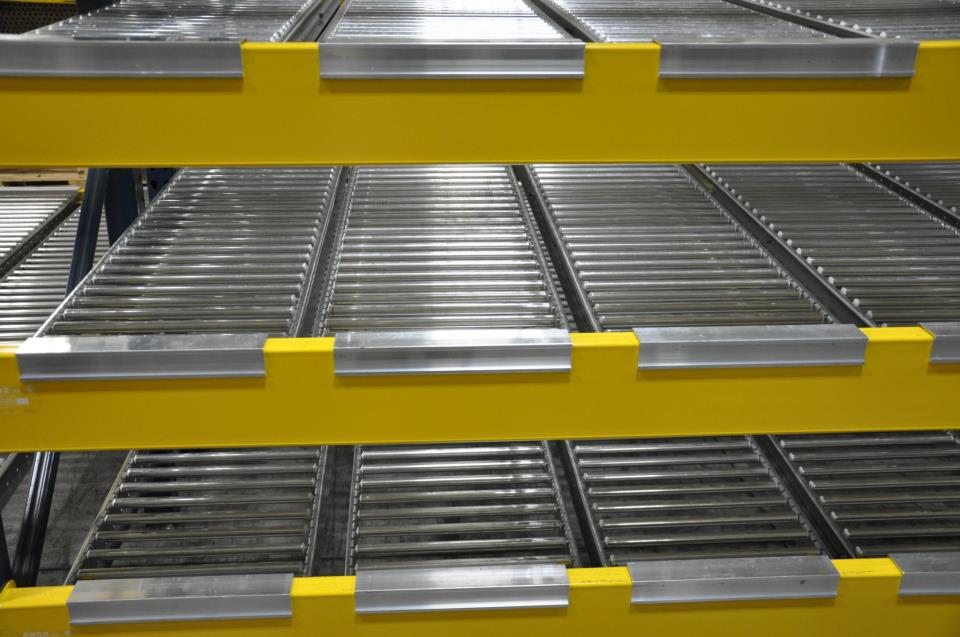
Carton Flow Rack Systems in Columbus, OH
Carton flow rack is built for the picker, not the pallet. Cases sit on inclined wheel beds, so every time a picker takes one, the next slides forward to the exact same spot - no reaching, no re-facing product, no walking to find the case that should be there. Restocking happens from a separate back aisle, so replenishment never interrupts the pick line.
It's the right system when picking is by the case or the each, not the pallet, and when enough SKUs need a dedicated face that static shelving turns into a maintenance problem. Most warehouses run it in the lower levels of a bay with reserve pallets stacked above, so one footprint handles both active picking and overflow storage.
For Columbus fulfillment and kitting operations, we size wheel beds and lane widths to your case dimensions, pick rate, and SKU count, and show where the fastest movers should sit in the bay.
How Carton Flow Rack Works
Inclined wheel beds
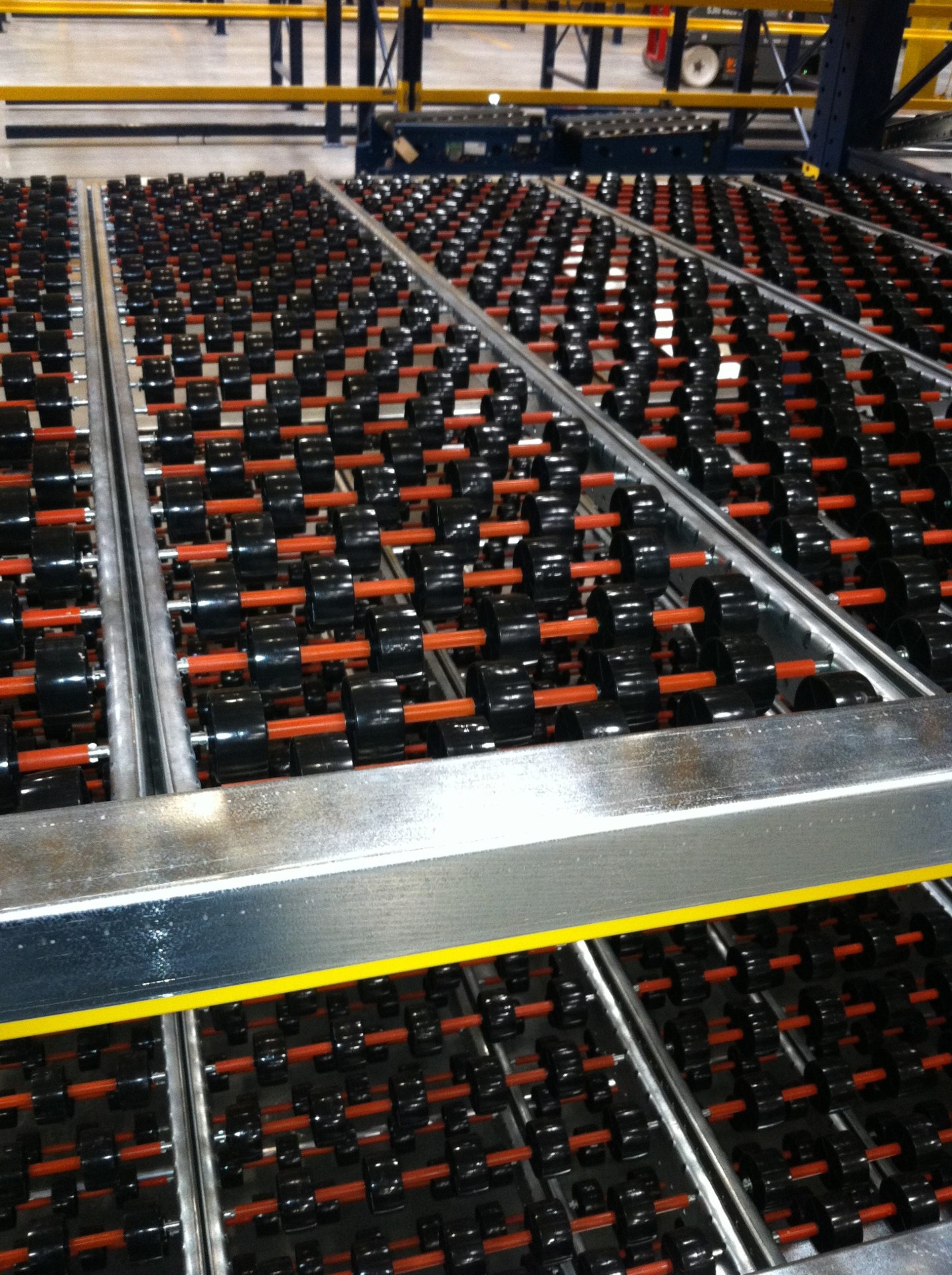
A full-width wheel bed or roller track sits on a slight incline inside a standard bay, so cases move forward under their own weight without power.
Pick from a fixed position
The picker always reaches for the same forward spot in the lane. Travel time drops, and so does the time spent searching for the next case.
Restock from behind
Replenishment loads the high end of the lane from a separate aisle, so restocking never blocks or slows the pick line, and rotation stays first in, first out automatically.
One lane per SKU
Lane dividers set the width for each case size, giving every SKU its own face - a width that can be resized as your product mix shifts.
Why Columbus Warehouses Work With Us
E-commerce fulfillment and light manufacturing operations scattered through Westerville, Dublin, and the broader Columbus market pick by the case or the each far more often than by the pallet, and carton flow rack is built for exactly that motion: cases advance on inclined wheel beds so the next case sits at the same pick spot every time, with restocking handled from a separate back aisle that never interrupts the picker.
We size wheel beds and lane widths to the case dimensions and pick rate you're actually running, then map which SKUs belong at the fastest pick positions in the bay - a question that matters more in Columbus flex buildings with tighter columns than in a big-box distribution shell, since every foot of pick-face width counts for more when the building itself is smaller. Most installations here combine carton flow at the lower levels with reserve pallet positions stacked above, so one footprint covers both active picking and overflow in the same bay.
Because replenishment happens from behind the line rather than from the pick aisle, order selectors working Columbus fulfillment operations keep moving through a shift without waiting on a reach truck to clear the same aisle they're picking from, which is the entire reason carton flow gets specified over static shelving once SKU counts climb.
Where It Fits Best
What We Need to Design It
- What are your case dimensions and weights?
- How many SKUs need a dedicated pick face?
- How many picks per SKU on a busy day?
- Is there a separate aisle available for restocking?
- Are reserve pallets going above the pick levels?
What a Project Includes
The project starts with the case list: dimensions, weight, whether the carton bottom is stiff or soft, and picks per SKU per day. Those numbers decide wheel bed style, lane width, and how much face each SKU is worth giving up.
From there we lay out the bay - how many flow levels, at what incline, and what sits above them. In most designs, the fastest movers get the golden zone at waist height, slower SKUs move to the upper or lower levels, and reserve pallets stack overhead in the same footprint.
The quote itemizes frames, beams, wheel bed or track, lane dividers, front stops, and shelf-level accessories, with the layout showing lane assignments by SKU. Installation sets the incline, tests case travel with your actual cartons, and adjusts before the line goes live.
The payoff is a pick line where cases present themselves, restocking stays out of the way, and lane widths can be reset whenever SKUs come and go.
Phone consultation
CAD layout
Itemized quote
Delivery & installation
Recent Installations
A sample of racking projects completed across the region.


Get a Carton Flow Rack Quote
Send the basics and we will come back with a layout and pricing. Prefer to talk? Call 614-379-4436.
What's Included:
- Free warehouse consultation
- CAD layout drawings
- Itemized project quote
- Rack type recommendations
- Installation timeline
Carton Flow Rack Questions for Columbus
Carton Flow Rack by Service Area
Delivery and installation across Central Ohio.
Other Rack Systems We Supply
Pallet Rack
Every pallet reachable, every time. The baseline we size everything else against.
Pushback Rack
Two to six pallets deep from one aisle, without giving up much reach.
Pallet Flow Rack
Load one side, pick the other, and let gravity enforce first in, first out.
Drive-In Rack
Storage lanes replace internal access aisles. Forklifts enter the structure to handle bulk pallets.
Cantilever Rack
Arms with nothing in front of them, built for lumber, pipe, and anything a pallet can't hold.
Warehouse Relocation
Moving buildings without losing the racking plan that already works for your operation.
Where We Work
Located in Columbus, we serve the entire Greater Columbus region with industrial pallet racks and warehouse storage solutions.
Columbus Pallet Rack
Address
4551 Wright Ave.
Unit #2092
Columbus, OH 43213
Phone
614-379-4436Business Hours
Monday - Friday: 8:00 AM - 6:00 PM
Saturday: Closed
Sunday: Closed
Ready to Price Carton Flow Rack?
Call 614-379-4436 or request a quote and we will start a layout.