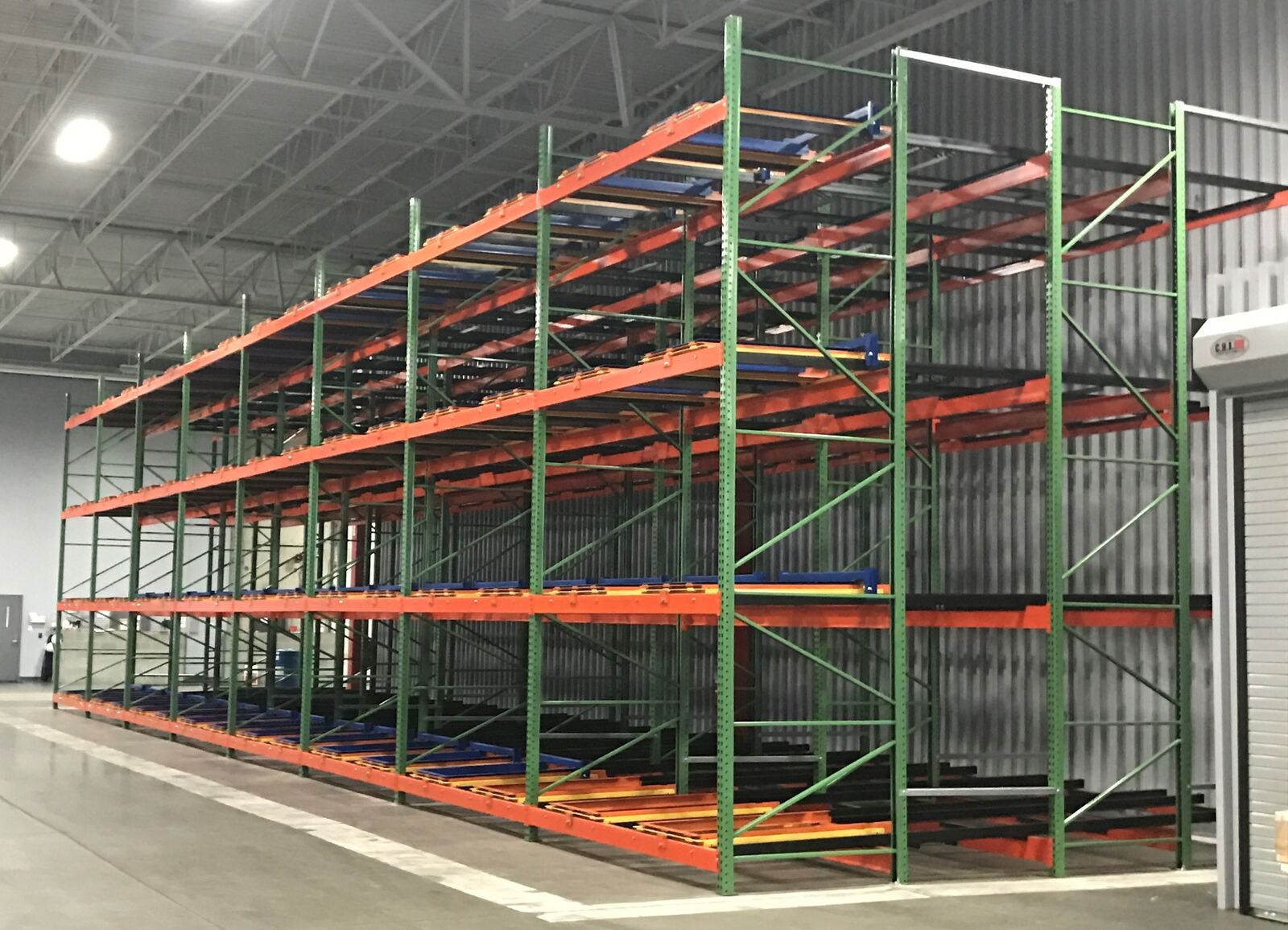
Pushback Rack Systems in Columbus, OH
Pushback rack answers one specific question: what if you're losing pallet positions to aisles you don't need for every SKU? Pallets ride nested carts on inclined rails, two to six deep in a single lane, and the driver loads and unloads from one aisle only - the newest pallet in pushes the row back, gravity feeds the next one forward on the way out.
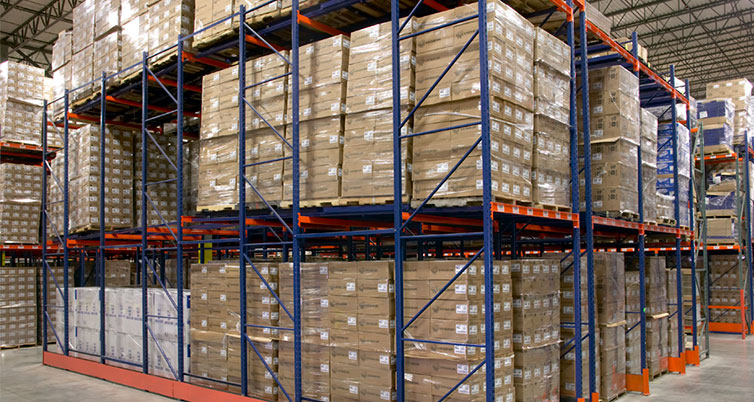
It's built for medium-velocity SKUs where you're carrying several pallets of the same item at once. Compared to selective rack, you give up direct access to every pallet in exchange for real density; compared to drive-in, you keep the truck out of the structure and get a faster, gentler cycle. Where pushback loses is strict rotation - it runs LIFO by lane, not FIFO by pallet.
For Columbus distribution buildings along the outerbelt, we model pushback next to a selective layout of the same footprint so the position gain and the price per pallet are both on paper before you commit.
How Pushback Rack Works
Loading from the aisle
The driver sets the first pallet on the front cart. Each pallet added after that pushes the cart train deeper into the lane, so one aisle handles the whole depth.
Carts nested on rails
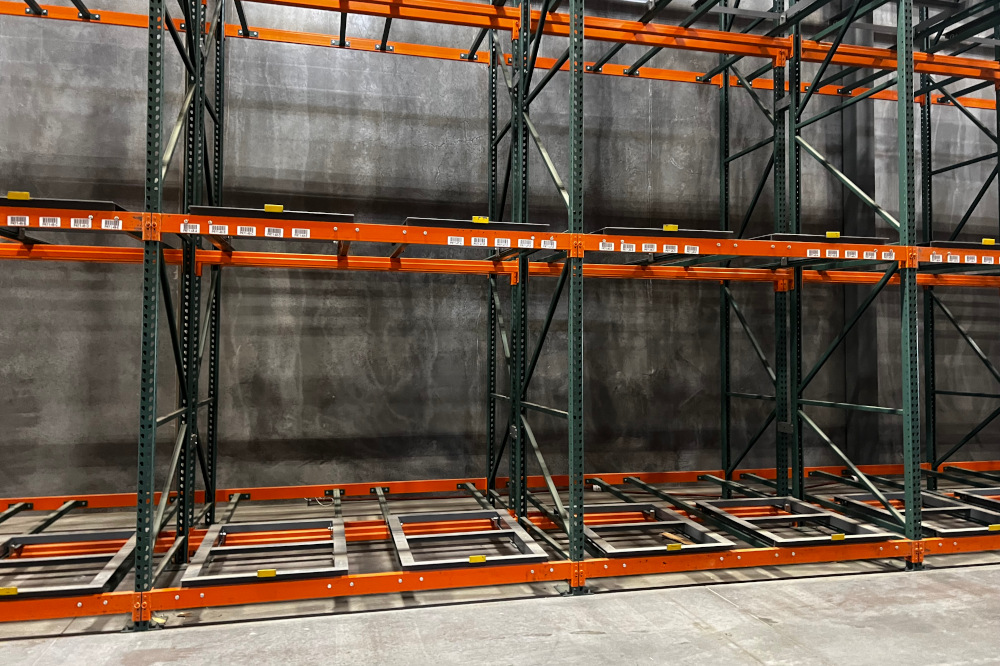
Steel carts with nylon or steel wheels ride inclined rails, each nesting under the one ahead of it - that nesting is what makes multi-deep storage possible from a single face.
Retrieval by gravity
Pull the front pallet and the next cart rolls forward on the incline to the pick face. No driving into the lane, no repositioning pallets by hand.
Last in, first out
Each lane runs LIFO. That suits fast-turning product and any operation managing rotation by lane rather than by individual pallet date.
Why Columbus Warehouses Work With Us
Columbus distribution and consumer goods operators holding several pallets of the same SKU at once are the clearest fit for pushback rack, because it trades the second aisle that selective racking needs for real density without sending the forklift into the structure the way drive-in does. Around the Northeast Corporate Park and Groveport Road, where buildings mix older low-clear sections with newer high-bay additions, that density gain matters most in the sections where floor space is tighter than ceiling height.
We build the pushback layout around your pallet footprint and load weight rather than a generic lane, then set lane depth from how many pallets of one SKU you actually carry - a two-deep lane next to a four-deep lane of the same footprint so the position gain is visible before steel is ordered. Beverage, packaging, and consumer goods freight common to the Columbus corridor tends to run this way: fast enough to justify deeper lanes, but not so varied that pallet-level FIFO is required.
Because the forklift stays in the aisle and gravity carries the next pallet forward, pushback also keeps cycle times closer to what a selective-trained crew already expects, so a Columbus operation converting part of a selective row doesn't need to retrain drivers to make the lanes pay off.
Where It Fits Best
What We Need to Design It
- How many pallets of the same SKU do you typically hold at once?
- What's the pallet footprint, and is there overhang?
- What's the heaviest pallet going into a lane?
- What's the clear ceiling height or your forklift's max lift height?
- How wide are the aisles you're working with today?
What a Project Includes
Pushback layouts are built around the pallet, not the building. We start by confirming pallet type, footprint, overhang, and load weight, because cart spacing and rail incline follow that profile rather than a generic 48x40 assumption.
Next we set lane depth. Deeper lanes store more, but only pay off if you actually carry that many pallets per SKU - so we compare a two-deep and a four-deep version of the same footprint and show what each does to total positions and to how many pick faces you're left with.
The quote covers frames, beams, rails, carts, and guarding, itemized so you can see exactly what the added density costs per position - the number that matters more than the sticker price. Rails and carts are set and tested at installation, and cart travel is verified in every lane before handover.
You end up with a CAD drawing, capacity ratings, operating instructions for your drivers, and a point of contact for future lane additions.
Phone consultation
CAD layout
Itemized quote
Delivery & installation
Recent Installations
A sample of racking projects completed across the region.


Get a Pushback Rack Quote
Send the basics and we will come back with a layout and pricing. Prefer to talk? Call 614-379-4436.
What's Included:
- Free warehouse consultation
- CAD layout drawings
- Itemized project quote
- Rack type recommendations
- Installation timeline
Pushback Rack Questions for Columbus
Pushback Rack by Service Area
Delivery and installation across Central Ohio.
Other Rack Systems We Supply
Pallet Rack
Every pallet reachable, every time. The baseline we size everything else against.
Pallet Flow Rack
Load one side, pick the other, and let gravity enforce first in, first out.
Drive-In Rack
Storage lanes replace internal access aisles. Forklifts enter the structure to handle bulk pallets.
Cantilever Rack
Arms with nothing in front of them, built for lumber, pipe, and anything a pallet can't hold.
Carton Flow Rack
Cases advance to the picker instead of the picker hunting for cases.
Warehouse Relocation
Moving buildings without losing the racking plan that already works for your operation.
Where We Work
Located in Columbus, we serve the entire Greater Columbus region with industrial pallet racks and warehouse storage solutions.
Columbus Pallet Rack
Address
4551 Wright Ave.
Unit #2092
Columbus, OH 43213
Phone
614-379-4436Business Hours
Monday - Friday: 8:00 AM - 6:00 PM
Saturday: Closed
Sunday: Closed
Ready to Price Pushback Rack?
Call 614-379-4436 or request a quote and we will start a layout.