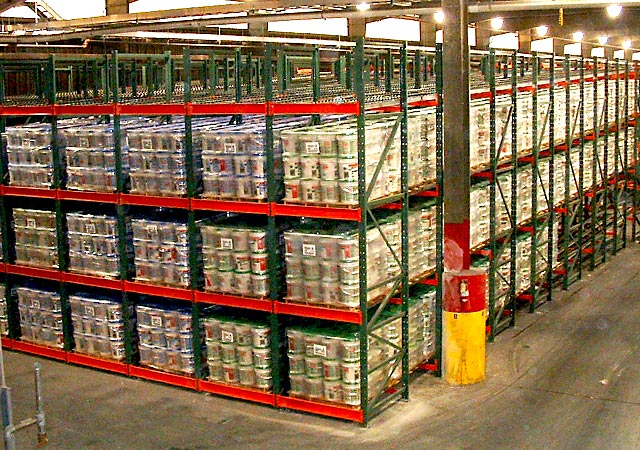
Pallet Flow Rack in Newark, OH
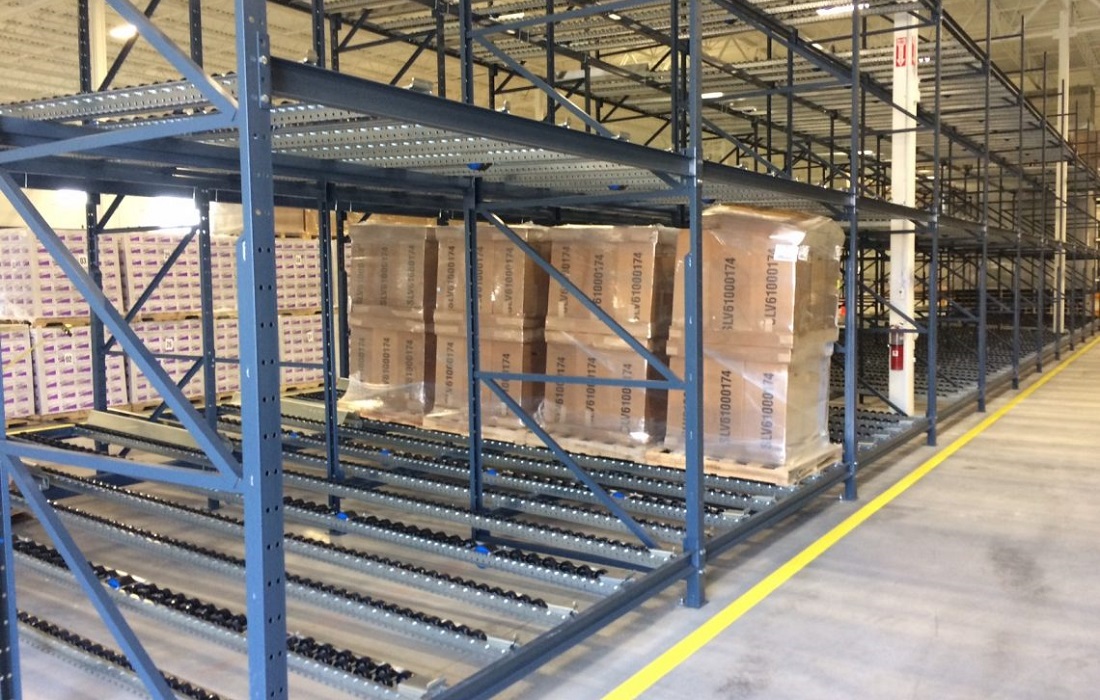
Pallet flow rack in Newark needs particular attention when manufacturing inventory includes both light component loads and dense finished goods. Inclined gravity rollers carry pallets from rear loading toward picking at the opposite end, supporting FIFO within a lane while brakes or speed controllers govern travel toward the discharge.
A single average weight cannot describe that operating range. Pallet flow racking should be evaluated against the lightest and heaviest approved loads, their underside construction, and their stability. Different load families may need separate lane specifications even when every pallet shares the same nominal footprint.
Pallet flow rack decisions based on load extremes
We focus on the extremes before settling the design. A setting that moves a heavy pallet acceptably may leave a lighter unit stationary; a slope chosen to start the light unit may create unsuitable heavy-load travel. Component selection and representative testing must resolve that interaction together.
Industrial manufacturing near Newark Industrial Park and Thornwood Drive can involve raw materials, assemblies, and finished loads with different weight distributions. We ask for that spread rather than treating manufacturing inventory as one category. Gravity flow rack assignments should make the permitted load family clear to receiving and production staff.
A division of Warehouse Equipment & Supplies Co., supplying and installing since 1997, Columbus Pallet Rack develops proposals around the stated handling requirements. We explain where load separation or another storage type is warranted instead of presenting one lane specification as a universal answer.
Operations We Rack Around Here
A Newark pallet flow rack layout should distinguish storage density from load compatibility. Manufacturing pallets that look alike may need different lane assignments once their weights, bases, and travel behavior are examined.
Pallet flow racking weight ranges and lane limits
The load schedule records minimum and maximum weights, pallet dimensions, underside geometry, load height, and center-of-gravity concerns. Pallet condition is part of eligibility: damaged boards and distorted bases can change roller contact. Packaging that hangs below the pallet also needs attention before a sample enters testing.
We establish lane depth from inventory quantities and SKU turnover, reserving through access for rear replenishment and opposite-face picking. High-volume or date-sensitive SKUs are stronger candidates than mixed low-volume lines requiring independent selection. Separate lanes may be necessary where weight families or pallet bases behave differently.
Testing considers an empty-lane start, travel under the intended range of loading, and advancement after the discharge pallet is removed. Roller spacing, slope, and braking are assessed as connected decisions. Acceptance should cover controlled movement across the approved range, not merely whether one convenient sample reaches the front.
Single-face pushback gives LIFO access and can suit loads without a FIFO requirement; carton flow feeds case-picking tasks instead of transporting complete pallets. Installation uses experienced installation crews we schedule and manage. The agreed handover includes lane identification, stated operating limits, and the load-check documentation included in the scope.
Test gravity flow rack with representative pallets
Build the load matrix
List each pallet family with its weight range, base construction, and product height. Flag concentrated or offset loads rather than hiding them in averages.
Choose representative samples
Select examples covering the intended operating extremes. Include differences in underside geometry as well as weight so evaluation reflects the proposed inventory.
Compare lane configurations
Review roller support, speed control, slope, and depth by load family. Identify which products share a specification and which need separate assignments.
Record acceptance limits
Document permitted loads and observed travel behavior. Give operators a clear basis for rejecting unsuitable pallets and escalating proposed changes to the inventory profile.
Recent Installations
Racking projects completed for warehouses across Central Ohio.


Bring the full range of manufacturing loads
Send your load matrix, pallet photographs, SKU quantities, and building layout to discuss lane options and the evaluation needed before approval. Call 614-379-4436.
Columbus Pallet Rack
4551 Wright Ave.
Unit #2092
Columbus, OH 43213
614-379-4436Monday - Friday: 8:00 AM - 6:00 PM
Mixed-load testing questions
Warehouse Storage Services in Newark
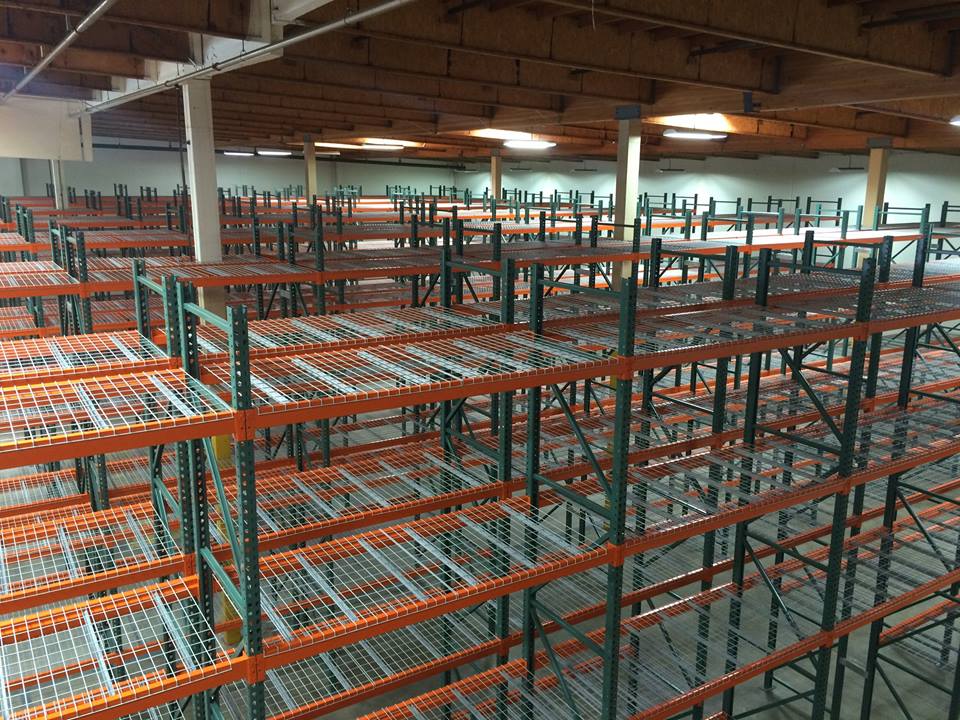
Pallet Rack
Every pallet reachable, every time. The baseline we size everything else against.
View details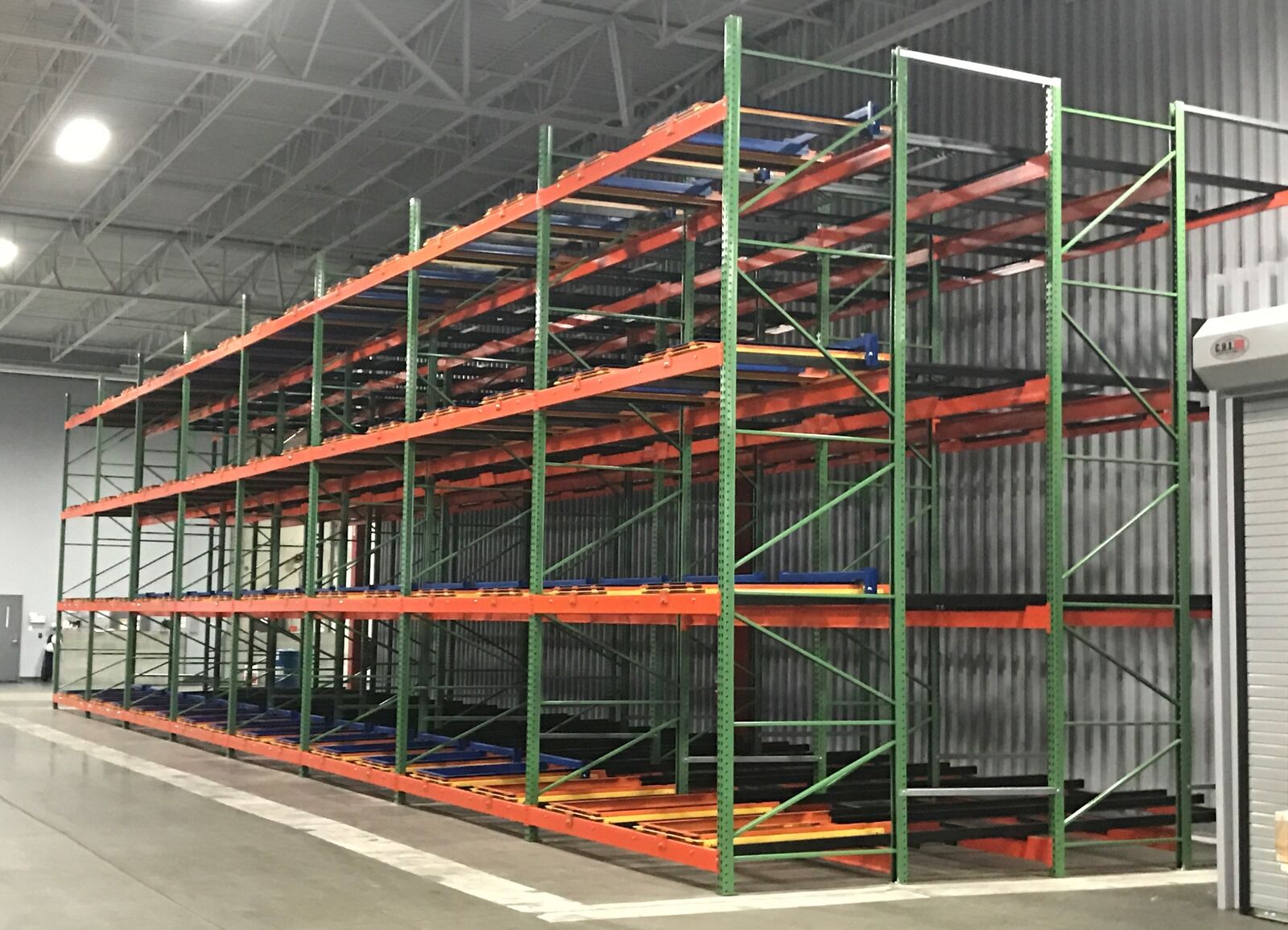
Pushback Rack
Two to six pallets deep from one aisle, without giving up much reach.
View details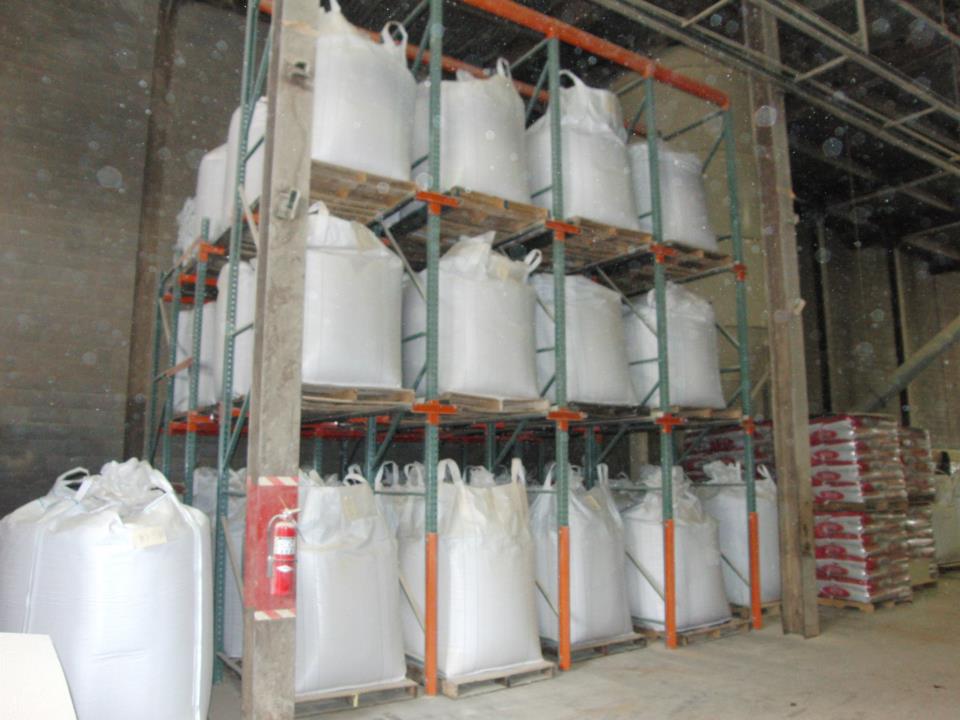
Drive-In Rack
Storage lanes replace internal access aisles. Forklifts enter the structure to handle bulk pallets.
View details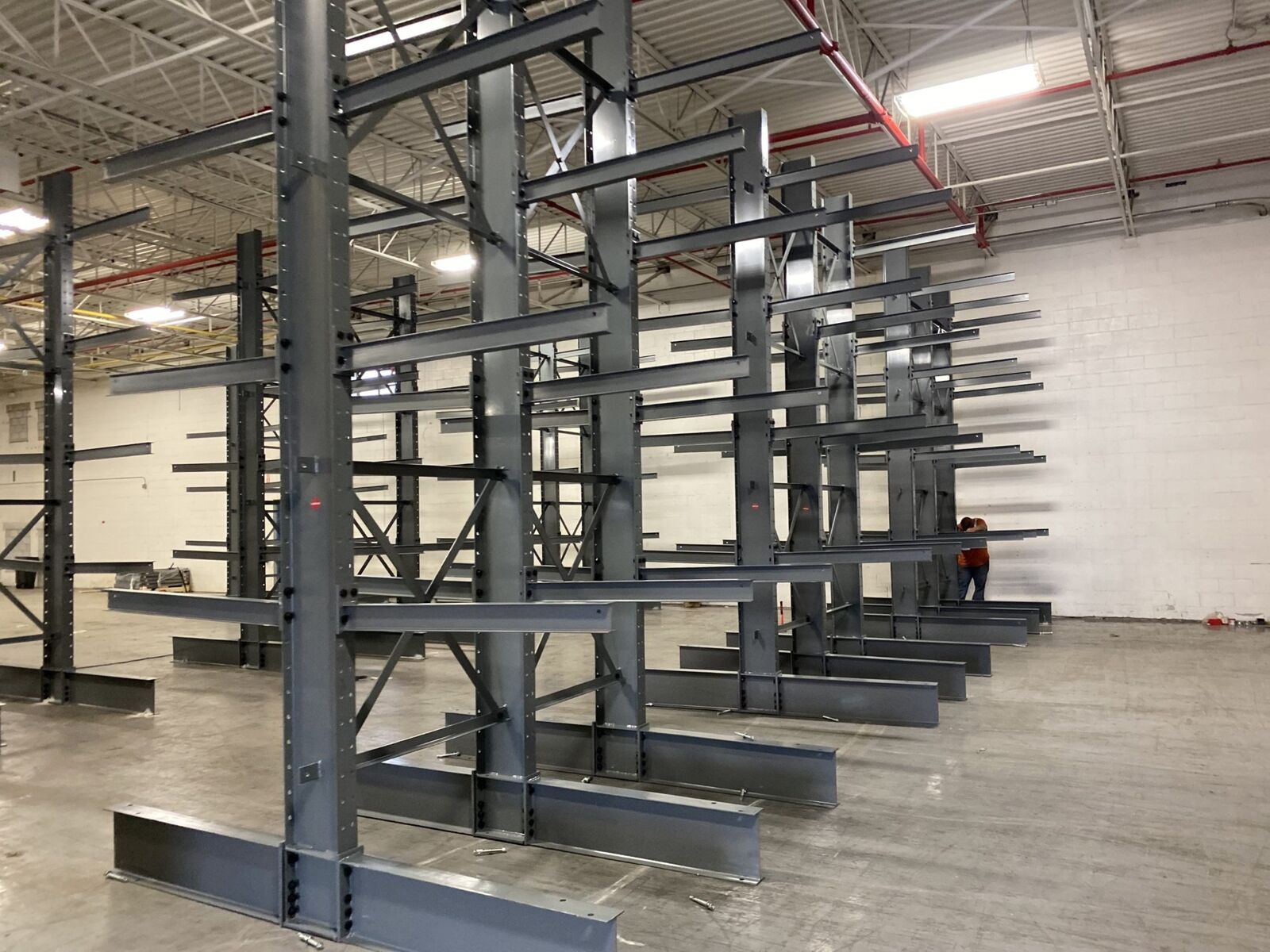
Cantilever Rack
Arms with nothing in front of them, built for lumber, pipe, and anything a pallet can't hold.
View details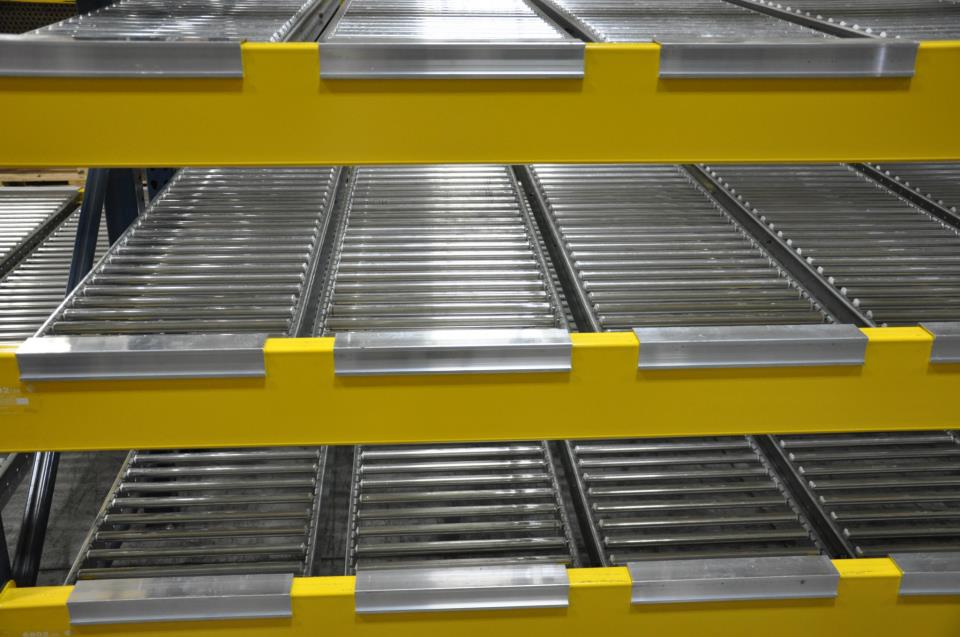
Carton Flow Rack
Cases advance to the picker instead of the picker hunting for cases.
View detailsWarehouse Relocation
Moving buildings without losing the racking plan that already works for your operation.
View detailsNearby Areas We Also Serve
Our delivery and installation territory covers Central Ohio, so one team can handle multiple buildings for the same company.
Where We Work
Located in Columbus, we serve the entire Greater Columbus region with industrial pallet racks and warehouse storage solutions.
Columbus Pallet Rack
Address
4551 Wright Ave.
Unit #2092
Columbus, OH 43213
Phone
614-379-4436Business Hours
Monday - Friday: 8:00 AM - 6:00 PM
Saturday: Closed
Sunday: Closed
Need Pallet Flow Rack in Newark?
Call 614-379-4436 or request a quote and we will get a layout started.